BAC One Eleven
BAC One Eleven
Our Aircraft
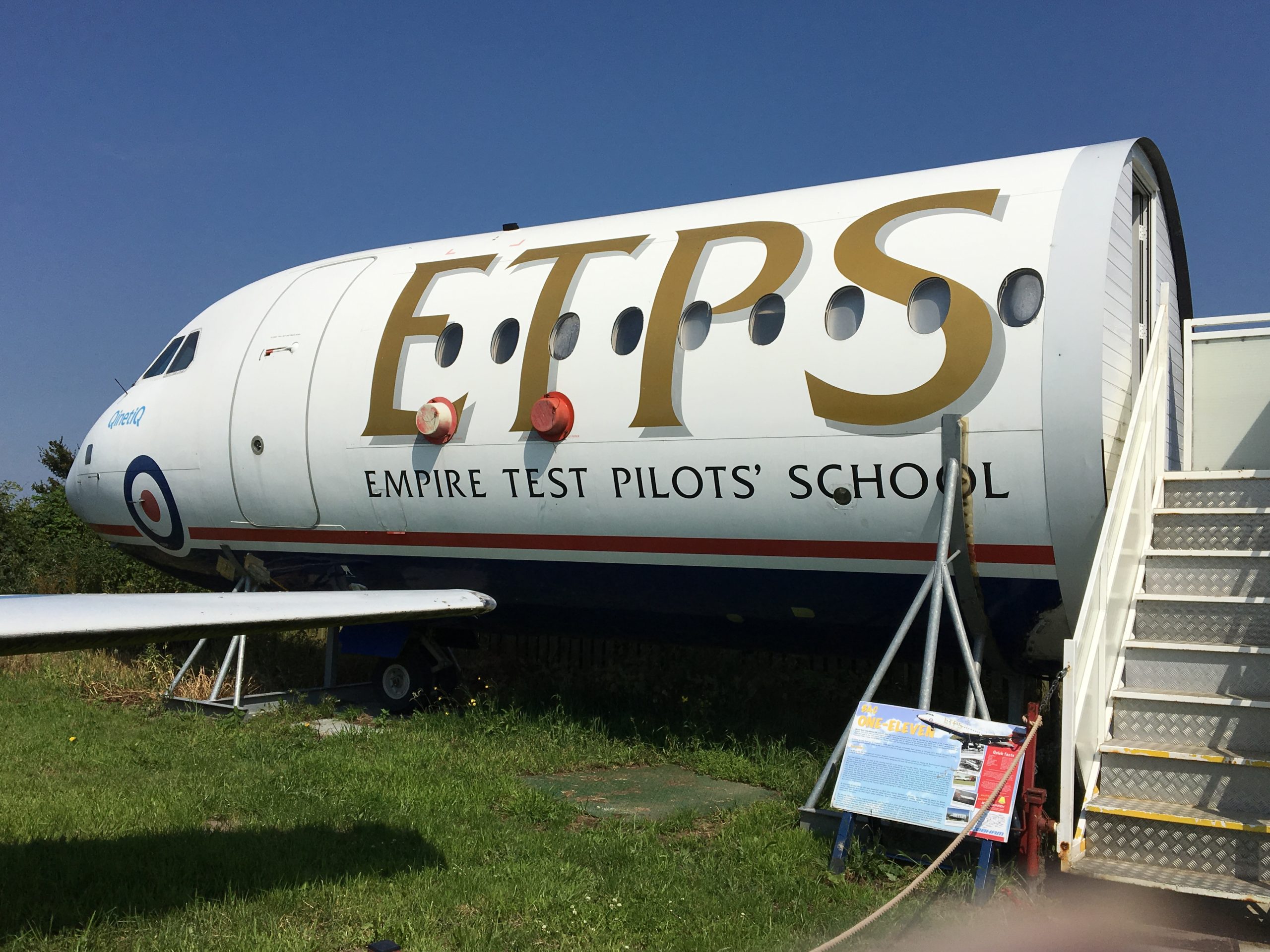
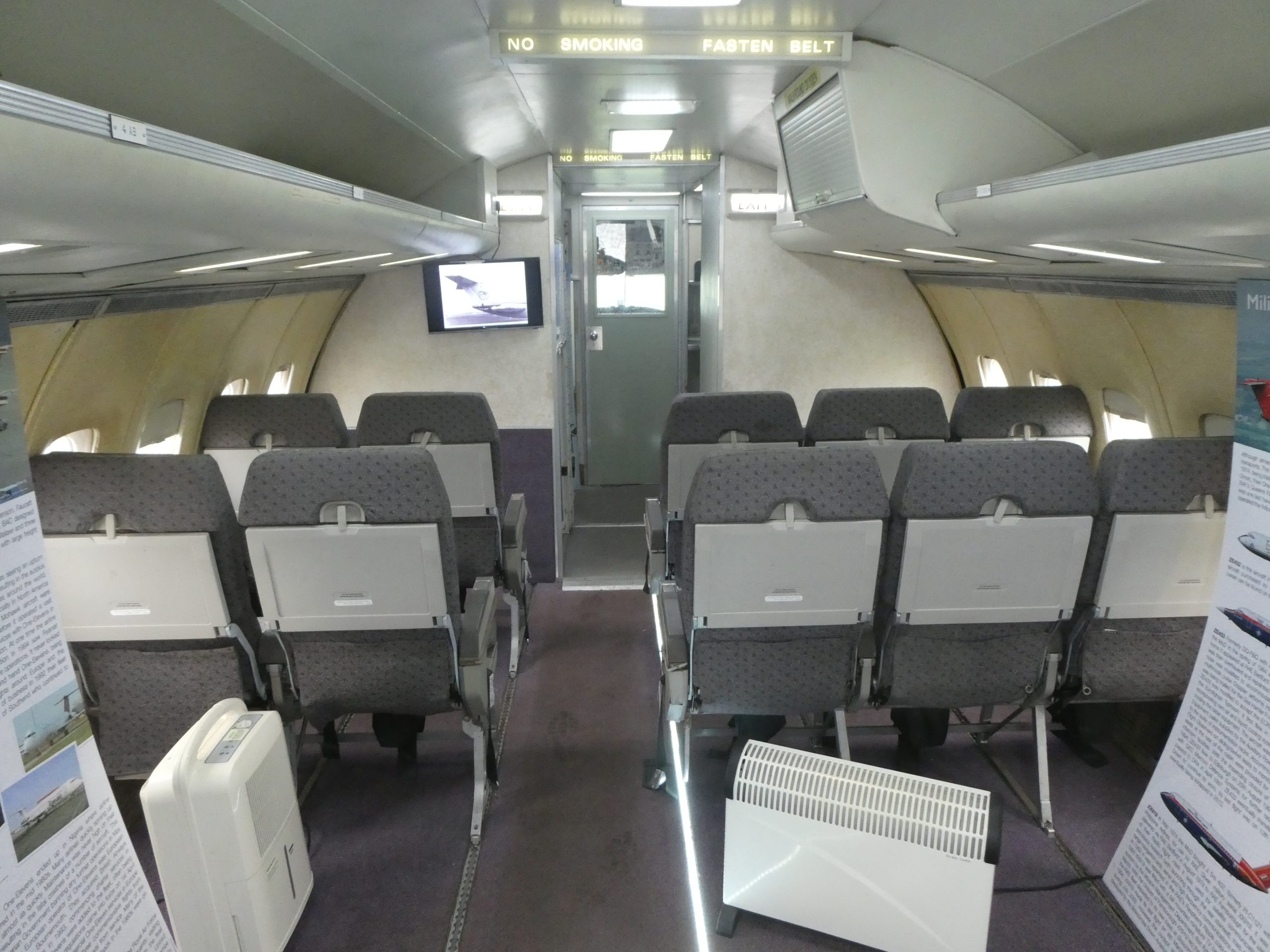
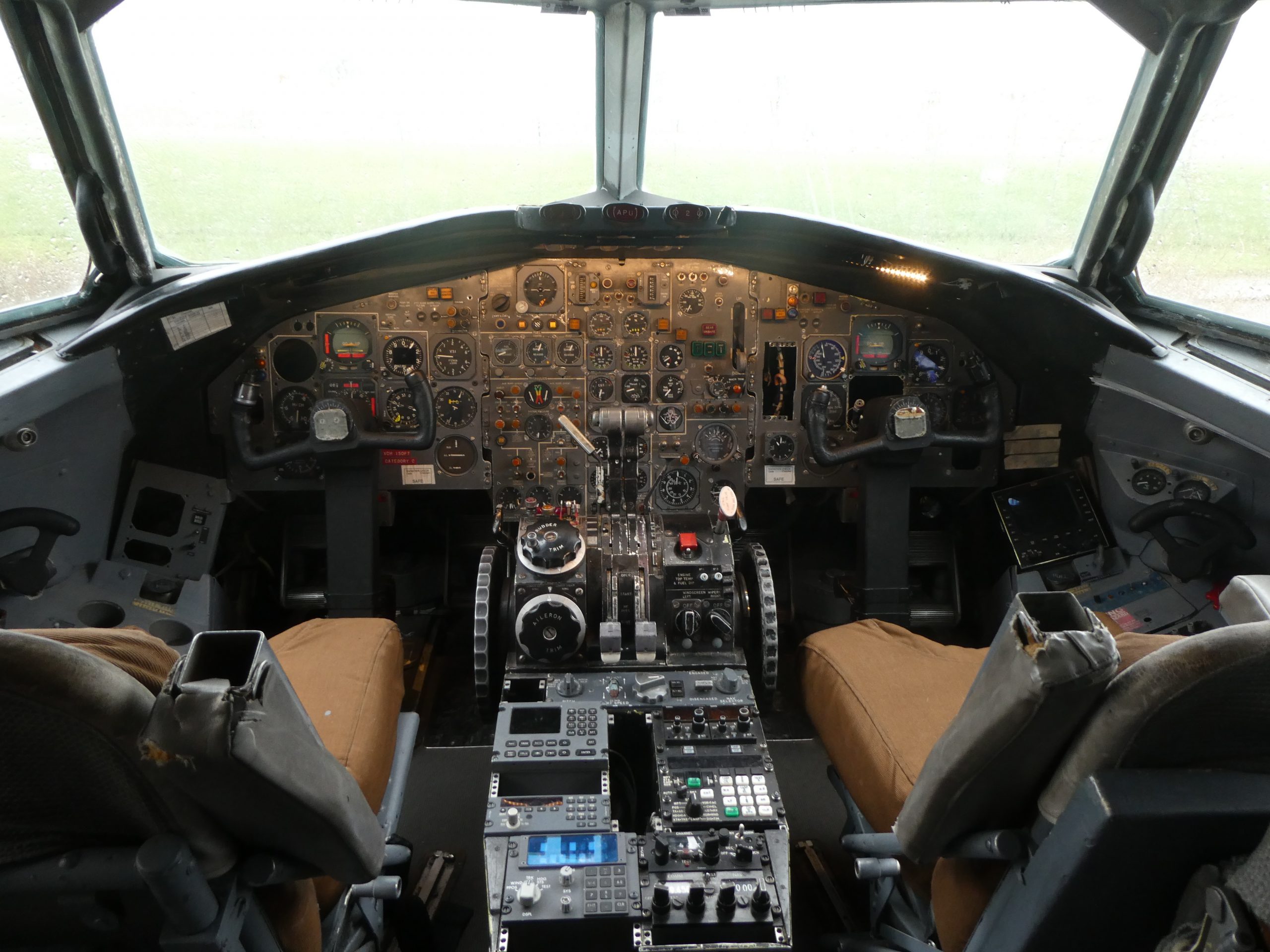
ZE432 BAC One-Eleven Ss.479 (cn 250) was built at Bournemouth in 1973 as DQ-FBV for Air Pacific of Fiji. It was delivered in August 1973 and used on inter island services – just the kind of routes it was designed for. Taken out of airline service in March 1984 and sold to the UK’s MoD, ZE432 was overhauled prior to delivery to the Empire Test Pilots School at Boscombe Down in February 1985. It was mainly used as a flying classroom for training test pilots from around the world.
It made its last flight on 27 November 2009 and was officially withdrawn from service in January 2011 due to corrosion. It was dismantled at Boscombe Down at the end of 2013 and the foreword fuselage section moved to the Museum in April 2014
Type History
It is fitting that the Bournemouth Aviation Museum should have a One-Eleven airliner on display as Bournemouth Airport was the home of the British Aircraft Corporation factory which designed and built the airliner during the 1960/70’s.
The One-Eleven origins go back to the Hunting Aircraft H.107 design of the late 1950s. Of similar shape to the eventual One-Eleven, it was planned to carry 48/56 passengers, being powered by two 7,000 lb thrust Bristol Orpheus jets. In 1960 Hunting Aircraft became part of the British Aircraft Corporation, the proposed airliner became the BAC.107, being enlarged to emerge as the BAC.111. Now a 79 seat, short range 'Bus Stop' airliner with two 10,400 lb thrust Rolls-Royce Speys, it was to be the successor to the Vickers Viscount of the 1950s. Production was undertaken at Bournemouth, where the prototype first flew on 20 August 1963, The Series 200 aircraft came quickly after with airframes for British United, Aer Lingus, Braniff and British Eagle. This was then followed by the more powerful Series 400 for American Airlines. Sales to the United States were to be large dollar earners and, for many years, the One-Eleven was the largest ever export earning airliner for Great Britain. At home the One-Eleven was frequently used for package holiday flights to the Mediterranean and, by the late 1960s, had helped change British traveller’s perceptions - no longer an inconvenient flight in an old propeller aircraft but the latest jet carrying you to the sun. They were regularly seen in service from Bournemouth Airport, starting with Palmair flights in the spring of 1965. Export sales saw the One-Eleven operating around the four corners of the world.
A stretched 99 seat Series 500 was developed for BEA who ordered eighteen in January 1967, followed by others for British United, Caledonian and Court Line. As with the earlier versions, many were used for holiday flights - those of Court Line being particularly well known for their bright colour schemes. Total One-Eleven production amounted to 235 aircraft, including a few produced in Romania.
By the late 1980s many of the original airlines had sold their aircraft to other operators or for use as VIP transports. In this country, Dan-Air and European became well known operators, and the USA and Saudi Arabia were to be the home of many VIP versions. By 2000 European Aviation was to be the only major operator in Europe, with its fleet based at Bournemouth in the same hangars in which they had been built 35 years earlier. However the One-Eleven had to be taken out of airline service in the spring of 2002 as it was unable to meet new noise regulations. It’s Spey engines had always been noisy. By 2016 the two remaining airworthy One-Elevens were both to be found in the USA, as test-beds for military manufacturer Northrop Grumman.
Technical Data
Length: 93 ft 6 in / 28.50 m
Height: 24 ft 6 in / 7.47 m
Wing Span: 88 ft 6 in / 26.97 m
Service Ceiling: 37,000 ft / 11,285 m
Max Speed: 410 kts / 472 mph
Max Weight: 98,500 lb / 44,678 kg
Seating Capacity: 79
Engines: 2 x Rolls Royce Spey Mk 512